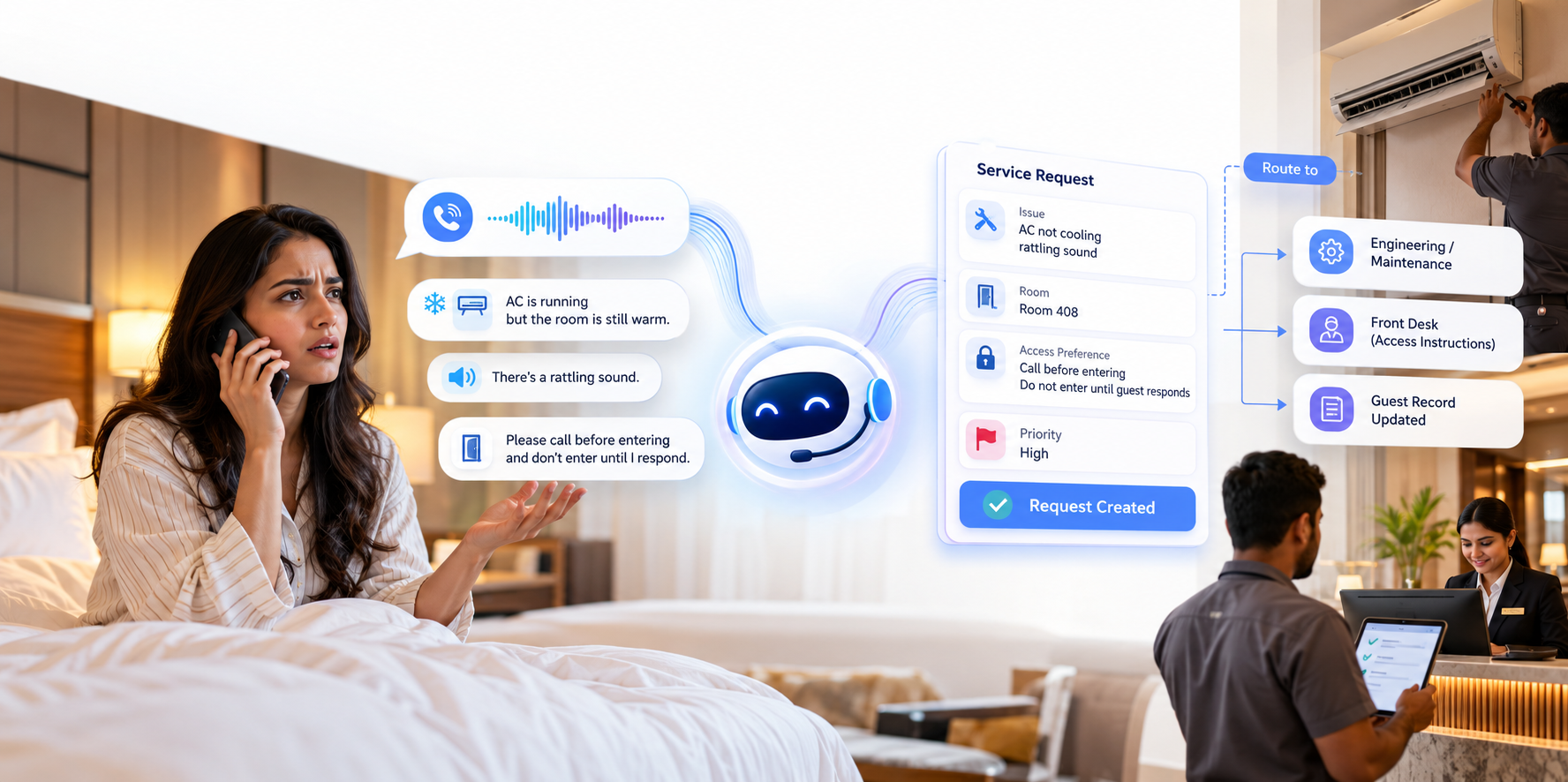


When a client calls for a case update, they need clarity, not a guess. AI VoiceOps can help share approved status information, capture what remains unanswered and route questions that require legal interpretation to the right person.
The customer moment
A client calls the firm and asks whether there has been an update on their matter. The approved case record shows a status update. The client then asks whether it means the court is likely to decide in their favour.
The challenge
Routine status enquiries can interrupt case coordinators, while information may sit across different approved records. Sharing a recorded status is different from explaining its legal significance. An unsupported prediction or an outdated status can create confusion and undermine trust.
How AI VoiceOps helped
It checked the approved information
Once the caller is verified, AI VoiceOps can reference configured case-status fields or approved status messages within its authorised access.
It communicated what the record supports
The agent can share the available status in plain language, including its last-updated time when provided, without filling gaps with assumptions.
It separated status from legal advice
If the caller asks about likely outcomes, strategy, deadlines or legal effect, the agent can explain its boundary and route the question for human review.
It kept the enquiry actionable
Through the configured workflow, the agent can document the question, status information shared and next owner, reporting only the submission or assignment confirmed by the system.
What the caller should hear
“The approved case record currently shows [verified status], last updated [date/time, if available]. I can share that recorded update, but I can’t interpret what it means for your case or predict an outcome. I can send your question to the legal team for review.”
How the call moves forward
The operational outcome
The intended operational outcome is a clear status response when the approved record supports one, and a documented handoff when it does not. This can give staff better context for follow-up and reduce avoidable repetition. Response time, enquiry containment and client satisfaction should be measured using actual service data.
Where a person should step in
AI handles the defined workflow. People remain accountable for judgement, exceptions and decisions.
- The client asks for legal interpretation, case strategy or a prediction.
- The case record is missing, contradictory, stale or inaccessible.
- The enquiry concerns an order, filing, deadline, settlement or event needing confirmation.
- The caller disputes the status or provides new information.
- Verification, privilege, confidentiality or authorisation concerns arise.
- The client asks for legal staff or the system cannot confirm the case handoff.
What the team sees after the call
Caller and matter context
Verified caller outcome as permitted, matter reference and reason for contact.
Recorded case status
Approved status value or message, source field and last-updated time if available.
Unanswered legal question
Client’s unanswered question, captured neutrally.
Confirmed human owner
Assigned legal team or queue and status, if confirmed.
Follow-up required
Follow-up requested and outstanding action, consistent with firm policy.
What success should look like
A practical way to launch
Put this call journey into operation.
Bring one recurring case-status call your team handles today. We’ll map the approved answer, source of truth, escalation boundary and post-call visibility in one connected AI VoiceOps flow.