
A guest calls late in the evening because the air conditioning is running but the room is still warm. The conversation reveals more than a maintenance issue: the guest also has a preference about room entry. Here’s how AI VoiceOps can help capture the complete request and get it to the right team.
The customer moment
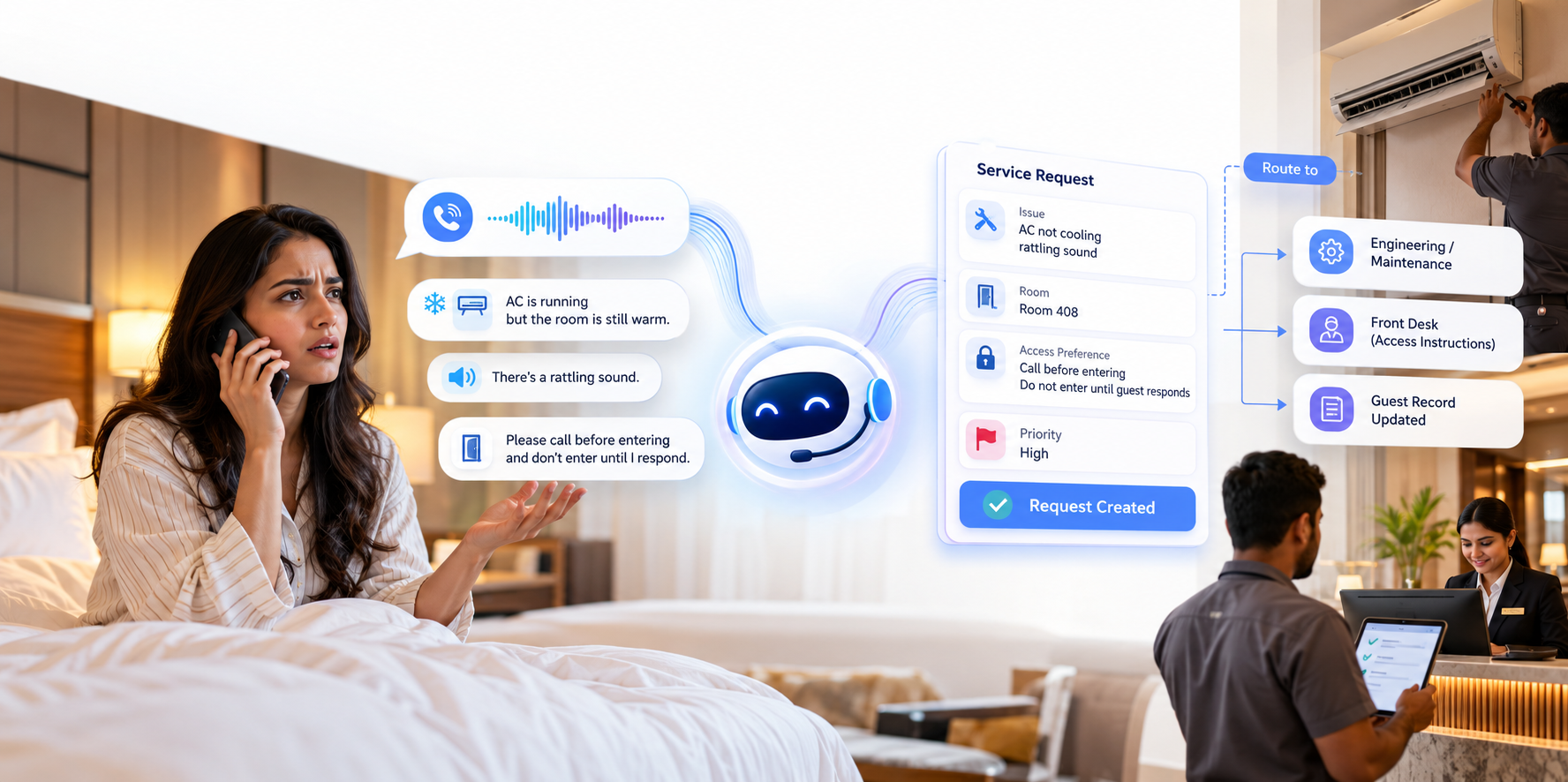
It’s after 9 PM. A hotel guest reports that the air conditioning is not cooling the room and mentions a rattling sound. Before the call ends, they add one more important detail: staff should call before entering, and the guest would prefer no entry until they respond.
The challenge
A rushed note might say “AC not working, Room 408.” But that leaves out the symptom, the rattling, and the access preference. Engineering may need to call the front desk for context, while the guest is left unsure what happens next.
How AI VoiceOps helped
It captured the issue beyond the headline
AI VoiceOps can ask focused follow-up questions about the symptoms, when the issue began and the room identifier required by the hotel’s workflow.
It retained the guest’s access preference
When the guest adds an instruction mid-call, the agent can confirm the room-entry preference and include it with the request—rather than treating it as a side comment.
It structured the handoff
Through an approved service workflow, the agent can create or route a service request with the reported issue, context and required next owner.
It gave the guest a clearer next step
The agent can explain what has been submitted and who is expected to follow up, but only state a request is logged or assigned when the connected system confirms it.
What the caller should hear
“I’m sorry the room isn’t comfortable. I’ll capture the cooling issue and the rattling sound. You’d like the team to call before entering, and not to enter until you respond—is that right?”
How the call moves forward
The operational outcome
The operational value is a more complete service handoff: hotel staff receive the issue and access preference together, reducing avoidable clarification and helping the team decide what to do next. Actual repair time or guest satisfaction improvement should be measured, not assumed.
Where a person should step in
AI handles the defined workflow. People remain accountable for judgement, exceptions and decisions.
- Safety or emergency concerns.
- Guest requests a manager, room move, compensation or policy exception.
- The issue needs human judgement or specialist diagnosis.
- The system cannot verify request creation or the guest’s access preference.
What the team sees after the call
Reported issue
Reported cooling issue and rattling sound.
Relevant details
Room details, time and room-entry preference.
Team and status
Queue/team and status, if confirmed by the system.
Follow-up
Follow-up required, without claiming resolution before verification.
What success should look like
A practical way to launch
Put this call journey into operation.
Bring one high-volume call your team handles today. We’ll map the conversation, action, handoff and post-call visibility in one connected AI VoiceOps flow.